
Nowadays, one of the overriding factors in success is the need for effectiveness at all times, particularly where small companies are concerned. Managing a group is not simple, especially regarding aspects such as attracting a headcount, managing a payroll, supervising workers’ outputs, and others. This is where the idea of Employee Management Software starts to be relevant.
Employee Management Software is one such tool that allows companies to do various operations more easily and quickly, ranging from the complexity of how employee information is managed to the flow of information within the organization. There is no denying its ever-increasing importance in the small business arena.
Small businesses have to harness their workforce as effectively as possible. Yet EMS was created to take care of most of the hassle and time-consuming tasks, which normally lazy out the human resource units of companies.
In this blog, we will try to understand EMS, its advantages, and points to consider when picking out the most suitable EMS for a small business.
What is an Employee Management Software
Employee Management Software (EMS) helps business establishments perform several employee-oriented operational processes on a single platform using information technology. EMS sometimes includes employee management, which broadly consists of tracking, managing, and assisting employees.
The EMS could be categorized into two types: Cloud-based and On-premises.
The advantage of a cloud-based system is that users can handle their data from any source on the internet, which is an excellent benefit for remote working scenarios. However, the on-premises EMS system is installed in a location, giving one complete control over information security. EMS system is of great use to small-sized companies as it helps reduce HR-related chores, thereby making it possible for managers to monitor the teams effectively without incurring the costs of having huge human HR teams.
Table Of Contents
Why Should a Business Use Employee Management Software?
Small businesses, in particular, are contexts in which the role of Employee Management software solutions is very critical for many reasons;
- Saves Time: One of the benefits of adopting an EMS is that a company’s average time is saved since the EMS regulates administrative tasks such as attendance monitoring, issuing pay stubs, and performance appraisals.
- Reduces Administrative Errors: Human beings are prone to making mistakes when performing certain activities that involve data collection, such as data entry. Since some of the processes are automated, the EMS system works with reduced chances of human error.
- Enhances Communication and Collaboration: Many EMS applications will have built-in communication solutions for team members, company-wide task assignments, and more central updates.
- Improves Employee Engagement: With the help of employee engagement software, employees can receive performance reviews about their tasks assigned and progress with reporting. This enables the employees to comprehend their and the organization’s objectives.
- Ensures Compliance: EMS assists corporations in complying with employment standards and policy regulations, especially tracking overtime, administering leave, and observing tax requirements.
Importance of Employee Management Systems
- Centralized Employee Data: EMS unifies all the necessary information about employees, such as how to contact them, the periods they work, the appraisal feedback provided to them, payroll records, etc., in one place. This ease in record harvesting and recording events enables one to access employee data within the shortest time possible.
- Improved Efficiency: The EMS performs many HR duties, which enhances performance in other aspects of the organization. Processes such as leave requests, payrolls, assessments, and others will take the least time possible and cause the least delays to management and the rest of the employees.
- Better Performance Management: In addition to simplifying HR processes, many of which are automated, a significant majority of EMS platforms offer features for tracking and appraising personnel. This enables team leaders to monitor individual performance and achievement of matrices, set targets, and revert to all that, so it becomes easier to align teams with organizational objectives. To further automate workflow and accurately measure productivity, many organizations also integrate tools like an employee time-tracking app. These apps help monitor work hours, identify bottlenecks, and ensure accountability across teams—especially in remote or hybrid workplaces. When used alongside EMS, as well as time management training, they provide a more complete picture of employee performance and time allocation.
- Data Security: Employer-related data, such as social security numbers, tax documents, home addresses, and phone contacts, is often confidential. Thanks to the EMS, which must include data encryption and respect for privacy legislation, such information is guaranteed to be protected from unauthorized access. Beyond EMS-level protection, small businesses should also understand the difference between antivirus vs malware threats to build a complete security stack around their employee data.
- Improved Interactivity: The inclusion of communication tools within the EMS platforms enhances collaboration between employees and their superiors. Assignments become easier with the use of EMS in that communication of such changes as task allocations, or provision of key information becomes less difficult.
Guidelines on Selecting Employee Management Software for Small Business
When acquiring Employee Management Software in your company, especially for a small organization, there are some things that you need to look at to ensure the software is geared toward serving its purpose:
- User Friendliness: The system interface should be standard and self-explanatory, making it easy for even novice users to operate without requiring too much training. The first introduction of the system is essential, and a complicated one from the onset will cause unnecessary delays and even resentment from the employees. Modern organizations, especially those managing distributed teams, also rely on remote team management tools to streamline onboarding, improve collaboration, and ensure that employees, regardless of location, can quickly adapt to new platforms. Integrating such tools with a simple and intuitive interface significantly boosts productivity and reduces the learning curve.
- Flexibility: As your company expands, the number of employees will increase, and so will the structure to manage them. Therefore, people consider flexibility. Consider a program that allows for growth within the office without reaching its limits as to what it can do or how many users it can handle.
- Attributes and Appendages: Depending on your business, you may need more features, such as payment service deployment, project time management, a billable hours tracker, or client performance tracking.
- Cost: Regardless of the organization’s stature, funding is an important factor, especially for small businesses. Evaluate pricing plans and decide on an EMS that is well-suited to your organization without exceeding your limits. Most EMS companies have employee-based billing methods that favor small businesses.
- Customer Support: If you are a novice in the use of EMS, you need great and quick customer support. Check to see which providers have a strong client service orientation and can assist you via chat, phone, email, etc.
Best Employee Management Software Tools for Small Businesses
These software solutions benefit employee scheduling and management systems, including those of small or medium-sized firms. They offers various plans with added functionalities based on various needs. Here are ten Software tools that could suit small businesses well.
1. Zerrio – All-in-One Business Management Tool
Price: $299
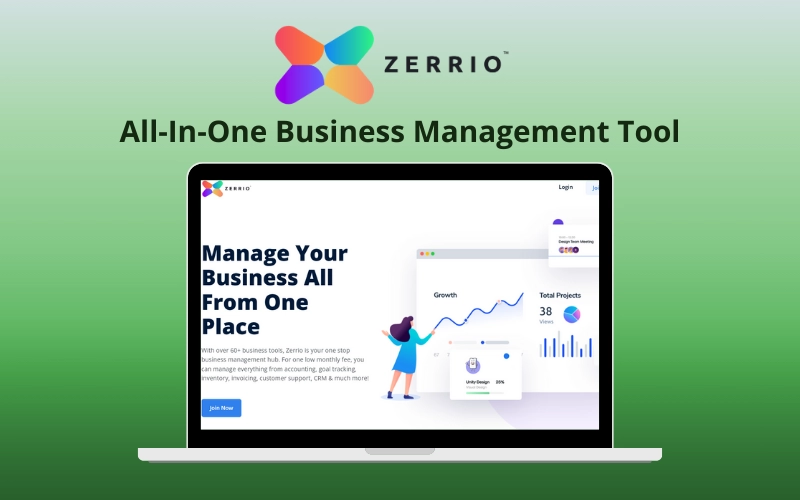
Zerrio is a comprehensive business management platform for entrepreneurs, side hustlers, and businesses of all sizes. It offers over 60 powerful tools to help you manage projects, finances, clients, workflows, and day-to-day operations, all from a single unified dashboard.
It helps streamline core business processes such as invoicing, accounting, HR, inventory, and customer support, making it easier for teams to collaborate and businesses to scale.
Why Zerrio?
Zerrio is designed to be a complete business operating system. It provides you with all the tools you need, eliminating the hassle of juggling multiple software platforms. It’s ideal for solo founders, small teams, e-commerce sellers, agencies, and fast-growing businesses.
Features
- Invoicing & Billing
- Project Management
- Accounting & Finance Management
- CRM & Client Management
- Team Collaboration
- HR Management
2. Onboardix – AI-Powered Onboarding Tool
Price: $703
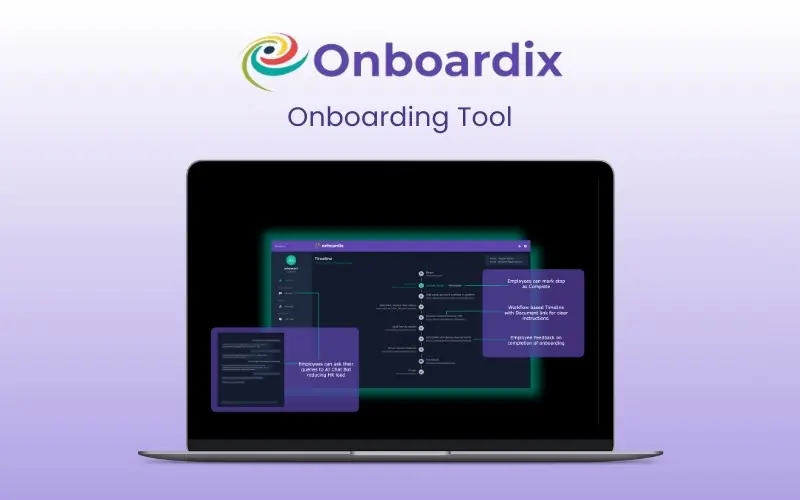
Onboardix is an AI that aids in employee onboarding, particularly for IT organizations. It employs custom workflows and chatbots to demonstrate how new employees will be guided through the onboarding process, from tasks based on roles assigned to them to accessing resources.
Why Onboardix?
Onboardix customizes the onboarding procedure for every employee by incorporating reminder schedules, AI chatbots that can attend to arising issues within the shortest time possible, and documents that analyze data rich in content.
Onboardix is helpful for organizations with challenging onboarding procedures or needing to onboard several employees simultaneously.
Features:
- AI Chatbot
- Customized Workflows
- Transparent Timeline
- Mass Onboarding
- Automated Reminders
- Data-Driven Reports
3. Connecteam – Deskless Workforce Management Platform
Price: $29 to $99/month
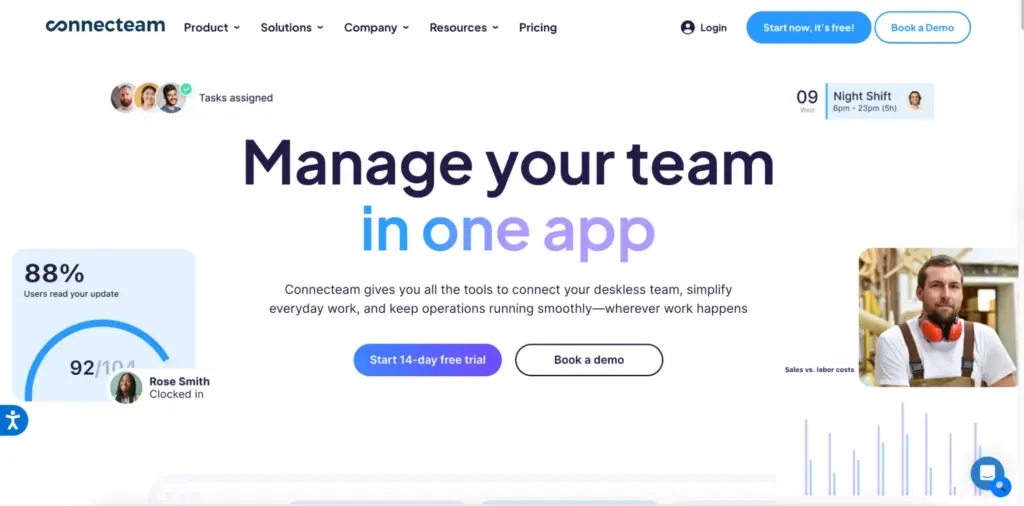
Connecteam is a mobile-first platform built to manage deskless or field teams across industries like retail, hospitality, construction, and healthcare. It combines scheduling, time tracking, communication, HR, and training into a unified app, making it well suited for small to mid-sized teams needing flexibility and centralized operations.
Its modular system allows businesses to choose only the tools they need, while the intuitive design ensures employees can clock in, view schedules, complete tasks, and stay informed—all from a single app.
Why Connecteam?
Connecteam is ideal for businesses with mobile or distributed teams that need an all-in-one solution for daily operations. The platform’s free plan supports up to 10 users with full access, while paid plans offer affordable scalability for growing teams.
Its combination of shift scheduling, real-time communication, digital forms, and onboarding tools makes it especially valuable for small businesses aiming to streamline workforce management.
Features:
- Employee Scheduling
- Time Tracking
- Customized Workflows
- Internal Communication
- HR Management
4. SION COLLYOU – Team Collaboration Software
Price: $59
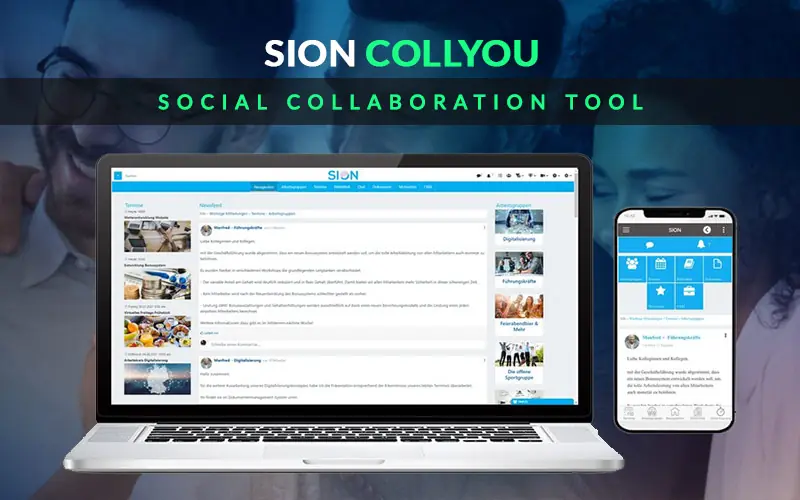
SION COLLYOU is software for organizations that use the cloud for collaboration. Some incorporated options include the company feed, group and individual chats, video conferencing capabilities, and task scheduling, making this software appealing even to out-of-office employees or teams.
Why SION COLLYOU?
SION COLLYOU offers several tools that assist in team collaboration, such as customer relationship management software, time tracking, and task management, all integrated into one system.
This software is designed for organizations that aim to increase their teams’ communication and collaboration capabilities.
Features:
- Social Collaboration Software
- Employee Calendar
- Document Management
- Sales Funnel
- Project Management Software
5. Your ERP – Business ERP Software
Price: $69
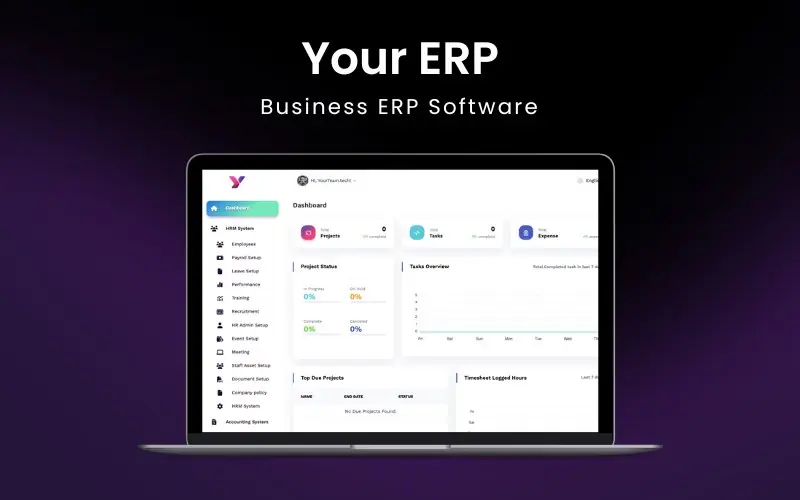
Your ERP is an all-in-one ERP software solution that ensures cost savings and improves the overall management of companies. All the necessary features can be found, including a reporting dashboard that helps monitor data, people, payments, progress, and leads.
Why Your ERP?
Your ERP is a completely integrated, all-in-one ERP software solution that saves on costs while improving company management. It incorporates all the amenities, including a reporting dashboard displaying data, people, payments, progress, and leads.
It provides the opportunity for an integrated process from sales management to stock inventory.
Features:
- ERP Dashboard
- Staff Management
- ERP Accounting Tool
- ERP HR Software
- Leads Management
- Deal Management
6. Hire with Columbus – Affordable Employer of Record

Price: From $179/employee/month ($25/contractor/month)
Hire with Columbus is an Employer of Record and global workforce management platform that lets small businesses hire, manage, and pay employees and contractors in 193 countries from one dashboard, without registering a legal entity in each market.
Columbus takes on legal employer status on your behalf, covering local contracts, payroll, tax filings, statutory benefits, and ongoing compliance, while you keep full control of the day-to-day work your team does.
Why Hire with Columbus?
Cost is usually what stops a small business from hiring abroad. Columbus starts at $179 per employee per month with no hidden fees and no setup costs, a rate it positions as up to 70% below the industry average, and most hires can be onboarded in a few days rather than months.
Everything runs in one place: payroll in local currency, time-off tracking, benefits, equipment, and contractor payments, all billed back as one simple invoice.
Features:
- Employer of Record in 193 Countries
- Global Payroll in Local Currencies
- International Contractor Management
- Benefits and Time-Off Administration
- Visas and Work Permits in 85+ Countries
7. Biznave – Cloud-Based ERP Software
Price: $49 – $99
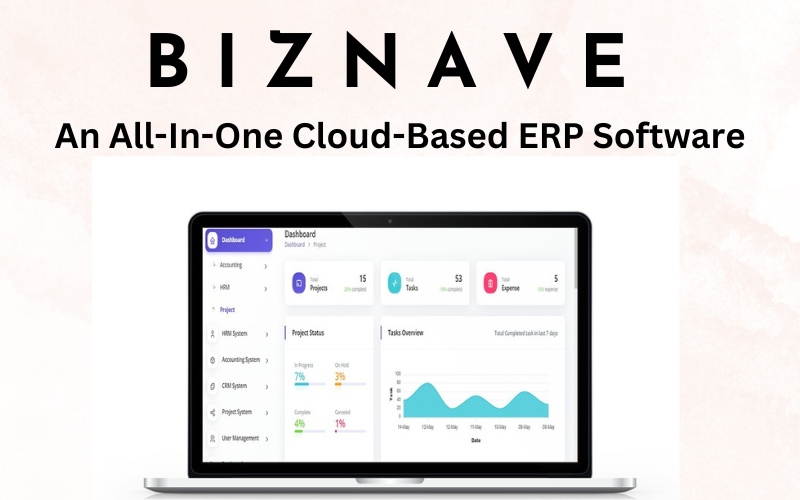
Biznave is an online ERP platform that multiples modules of project, HRM, CRM, and Accounting Systems. This allows the owner to integrate all operations-from sales management to stock inventory-for small businesses.
Why Biznave?
By essence, it brings one solution for every business’s needs-a complete platform through the cloud-based platform, which makes it a perfect option for small businesses or freelancers interested in an affordable, effective way of managing different operational functions.
Features:
- Project Management
- Automated Business Management
- HR Management
- Automated Accounting
- Inventory Management
8. Agendrix – Best Employee Scheduling Platform
Price: Plans start at $2/user/month
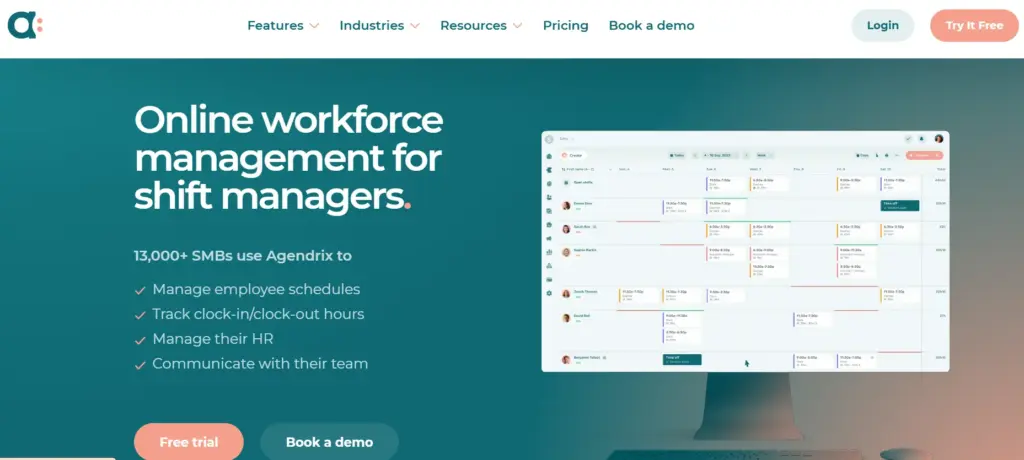
Agendrix best employee scheduling platform is designed to simplify workforce scheduling while supporting core employee management needs. Its intuitive interface makes it easy for small businesses to create shifts, track availability, and manage time-off requests – all from one centralized app.
Why Agendrix?
Agendrix combines scheduling, time tracking, and team communication with lightweight HR management features, making it ideal for small businesses that need to keep operations running smoothly while keeping employees informed and engaged.
Features:
- Shift Scheduling & Automated Rosters
- Employee Availability & Time-Off Management
- Clock-In/Clock-Out Tracking
- Team Communication & Notifications
- Centralized Employee Records
9. PeopleGoal – Fully Customizable Performance Management Software

Price: $4 per user/month
PeopleGoal is a customizable employee performance management platform that helps organizations manage goals, feedback, engagement, and development in one connected system. It allows HR teams to design performance workflows that match their structure, whether they operate in traditional hierarchies or complex, project-based teams. With no-code configuration and an App Store of ready-made templates, teams can launch structured processes quickly and adapt them as the company evolves.
Why PeopleGoal?
PeopleGoal gives you full control over how performance management works inside your organization. You can automate review cycles, align OKRs or SMART goals across teams, run 360-degree feedback with multiple managers, and build custom HR apps without technical expertise. Its real-time dashboards and detailed analytics ensure leaders always have visibility into progress, engagement levels, and development outcomes.
PeopleGoal is especially useful for growing organizations that need structured performance processes without sacrificing flexibility.
Features:
- OKRs and SMART goal tracking
- 360-degree and continuous feedback
- No-code app builder and template store
- Engagement surveys and pulse checks
- Advanced reports and real-time dashboards
10. RemoFirst – Global Employer of Record Platform

Price: $199/employee/month
RemoFirst is not a conventional employee management platform. It is a global Employer of Record (EOR) that handles the legal, payroll, workplace management, and compliance side of hiring international employees and contractors, the layer most small business tools skip entirely.
Founded in 2021 and based in San Francisco, RemoFirst operates in 185+ countries. It takes on legal employer status in each market on the client’s behalf, covering local contracts, statutory benefits, tax filings, and payroll, so businesses can hire across borders without setting up a local entity.
Why RemoFirst?
Most employee management tools deal with what comes after someone is hired. emoFirst supports the entire international employment journey, from compliant hiring and onboarding to payroll, benefits, and ongoing workforce management. For small businesses building distributed or international teams, it removes the compliance overhead that would otherwise require a dedicated legal function or a country-specific entity.
Features:
- Employer of Record in 185+ countries
- Global payroll with single-invoice billing
- International contractor management
- Benefits administration via Remo Health
- Background checks
- Visa and work permit support
- Workforce management dashboard
11. Smart Checklist for Jira

Price: Pro plans scale by user tier (starting around $9/month)
Smart Checklist for Jira is a solution that helps teams break down complex, recurring processes into lists of clear, actionable to-do items without the overhead of creating subtasks for every step. These feature-rich checklists stay directly inside the work item view – right where all work is happening.
For example, Smart Checklist can be used for managing onboarding, approvals, QA processes, compliance sign-offs, campaign launches, compliance audits, and much more. Each checklist item can have an assignee, due date, priority, custom status, reference links, and extra details. As a result, you get most of the functionality of subtasks without cluttering your board.
For small businesses running multiple departments through Jira, it turns one-off task lists into standardized, repeatable workflows that any team can rely on.
Why Smart Checklist?
Smart Checklist is built for teams that need structure without complexity. Rather than rebuilding a task list every time a process repeats, teams save a checklist once as a template and apply it automatically – whether that’s employee onboarding, a monthly compliance review, or a marketing launch checklist.
It’s especially useful for small businesses that already run on Jira and want one consistent system for managing recurring work across HR, operations, finance, and beyond.
Features:
- Checklist Templates & Built-in Automation
- Assignees, Due Dates & Priorities
- Mandatory Steps with Status Validation
- Progress Tracking Dashboard Gadgets
- Template Locking & Compliance
- Jira API & Automation Integration
While employee management software plays a key role in organizing HR operations, it works best as part of a broader business toolkit. Growing companies often combine it with payroll solutions, accounting software, CRM platforms, and remote legal support when specialized expertise is needed, allowing each solution to focus on its intended purpose.
Conclusion:
As rightly stated, employee management software is a vital resource to small businesses wanting to enhance processes, eliminate mistakes, and somehow “go paperless” for HR.
The choice of software is determined by the particular business, its goals, the budget available, and the company’s expected expansion. Moreover, it is proven that the correct EMS allows small companies to consolidate operations, safely store all employee information, and concentrate on business growth.