


Every business needs a steady flow of new potential customers to grow. But how can you attract people who are genuinely interested in what you have to offer? This is where lead generation comes into play. Lead generation involves identifying and engaging the right audience, nurturing their interest, and ultimately converting them into sales-ready leads.
A common question many businesses struggle with is whether lead generation is a responsibility of sales or marketing. Some believe it is strictly a marketing function because it often begins with content marketing, social media, and email campaigns.
Others view it as part of the sales funnel, where the actual closing of deals occurs. The reality is that lead generation is a collaborative effort; marketing attracts leads, and sales converts them.
In this post, we will discuss what lead generation is, how marketing campaigns foster interest in your company, how sales teams convert that interest into customers, and why aligning both teams is essential for your company’s long-term success.
What Is Lead Generation
Lead generation is the process of attracting prospective customers and capturing their information; therefore, the company can engage them later. It starts when someone shows interest in your product — maybe by visiting your website, downloading valuable content, or signing up for a newsletter.
The goal isn’t to collect random emails but to identify high-quality leads who match your ideal customer profile. These are your ideal customers — people or businesses most likely to benefit from your offer.
The process often includes content creation, like blogs, interactive content, or lead magnets such as eBooks and webinars. These attract the target audience and guide them through your marketing funnel. From inbound lead generation through social media content to email marketing, the goal is to create engagement that leads to action.
Companies use landing pages, lead scoring, and qualification in particular to determine which prospects are most likely to convert. That way, your sales leads are warm and ripe for personal nurturing.
The best lead generation campaigns, when managed strategically, can reduce your Customer Acquisition Cost (CAC) and increase your Customer Lifetime Value (CLV) — two metrics that are crucial to long-term success.
Sales vs Marketing — Working Definitions

To understand where a lead generation team falls, let’s start by defining what each team does.
Marketing is all about awareness, education, and attraction. It creates a reputable image through valuable content, applies content marketing techniques, and organizes social media platforms to attract enough attention. Demand Generation is responsible for generating demand online (online lead gen) and offline (industry events, social selling) through the marketing team.
Sales, meanwhile, is searching for customers and how to convert them. Your sales love handling or finding the department that supports qualified leads for conversion to revenue. They are the ones who push leads through the funnel and convert them while closing deals.
An MQL is a lead that has shown interest in your brand and that marketing has deemed likely to become a customer based on preset criteria, like product-need fit and budget.
MQLs are like the first stage in a lead’s journey towards becoming a customer. They’ve shown some interest and likely engaged with your marketing content or visited your website a few times. But they’re not quite ready to make a purchase. They need more information and guidance before they’re ready to make a purchase decision.
On the other hand, an SQL is a lead that has expressed enough interest in your brand that they’re ready to move into your sales process. They’ve interacted directly with your marketing efforts, indicating they’re serious about your product or service, and they’re ready to start speaking with your sales team.
Both teams contribute to selling for your company. Most importantly, two teams have different but strategic contributions in generating leads, and grow your sales following the same objective. Maintaining a better combination between two teams, a business can grow revenue from conversions and qualified leads.
Is Lead Generation Sales or Marketing?
The question cannot be answered with just one word. Acquiring new customers, or leads, requires collaboration between the sales and marketing teams. This collaborative effort is often referred to as “smarketing.” When sales and marketing teams work together effectively, it can significantly enhance customer perceptions of your brand. However, without the right tools or strategies in place, achieving this collaboration can be quite challenging.
To initiate the process, marketing generates awareness-led campaigns, specific landing pages, and email content. It takes care of leads with the help of customized content and lead-nurturing workflows until they become ready to purchase.
Sales takes over when the level of engagement is high. They build relationships, conduct demos, and close deals. Through direct sales engagement, they ensure that every qualified lead turns into a customer.
In modern business, success depends on teamwork. Companies that align their sales and marketing efforts see higher conversion optimization and better engagement levels. They also receive feedback from leads that helps refine the next Lead Generation Strategy.
Many businesses even team with sales lead generation services as a link between marketing and sales. They employ data-driven lead generation campaigns to provide sales-qualified leads who are already in-market, and that ultimately saves teams time and increases effectiveness.
So, is lead generation sales or marketing? It’s both — marketing creates the spark, sales keep it burning.
How Marketing Generates Leads
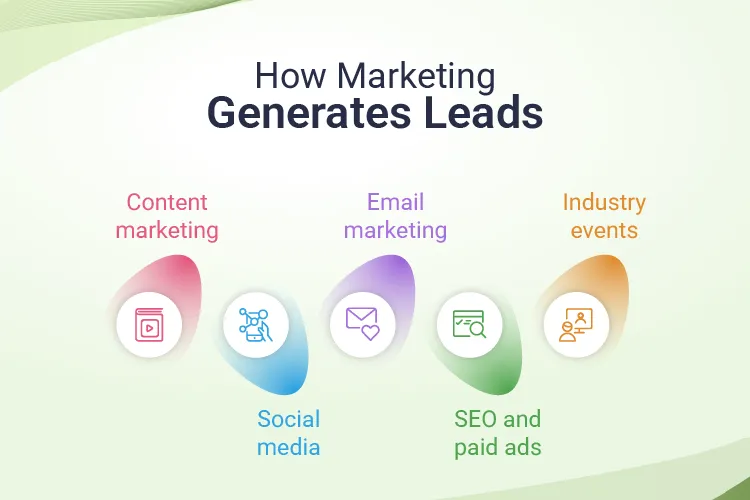
Marketing generates leads through posting, engaging with your users, and following up to nurture your potential customers across multiple channels. Their main goals are to move with your audiences through a step-by-step growing engagement, and generate a funnel towards conversion.
Here’s how:
- Content marketing: Crafting content strategy, such as blogs or case studies, that educates and attracts your target customers.
- Social media: Sharing social media posts and running paid ads that connect with a broader audience and drive traffic to landing pages.
- Email marketing: Sending personalized cold emails that guide prospective customers through the customer journey.
- SEO and paid ads: Ensuring website content ranks high and reaches mobile audiences effectively.
- Industry events: Using offline lead generation and social selling to connect with B2B companies directly.
Marketing doesn’t stop after capturing leads. It uses lead nurturing and lead scoring to identify sales-ready leads. Then, it passes them to sales for qualifying leads and final conversion.
Real Example: Marketing Creates Interest, Sales Converts
Imagine a tech company offering a CRM platform. The marketing team launches a content marketing campaign offering a free guide titled “How to Improve Your Sales Funnel.” Many potential leads download it, showing clear interest.
Marketing follows up with email marketing campaigns, sharing customer testimonials, demo invitations, and valuable content. When your engagement grows with your customers, your lead effort turns into potential sales and is ready to buy.
When the sales team goes ahead with personalized offers, demos, and closes deals. This is a perfect example of how marketing creates interest, while sales converts it into measurable growth.
Conclusion
Lead generation isn’t just a sales or marketing tactic at all; it’s a long-term connection between you and your prospects. The marketing team creates awareness, attracts the audience, and nurtures them through sending emails, newsletters, and new offers. The sales team is working collectively with your marketing team and providing the final touches to convert your interested client into a ready-to-buy sales prospect.
When your sales and marketing teams are working with great effort, they can generate leads using accurate customer data and communicate effectively. This collective effort generates more high-quality leads and improves conversion rates.
The best-performing businesses treat lead generation as a team effort — where marketing opens the door, and sales welcomes the customer in.
FAQs
1. Is lead generation a marketing job or a sales job?
It’s both. Marketing attracts leads, while sales qualify and convert them into paying customers.
2. Who handles the first contact with the lead?
Marketing usually makes the first contact through ads, landing pages, and email campaigns, before handing them to sales.
3. Can a sales team do lead generation without marketing?
Yes, but it’s harder. Without marketing, sales must find leads themselves, increasing Customer Acquisition Cost and lowering efficiency.
4. What is a “qualified” lead?
A qualified lead fits your ideal customer profile and has shown strong intent to buy through lead scoring and engagement scoring.
5. Why do companies align sales and marketing for lead gen?
Alignment improves communication, boosts conversion optimization, and ensures a smooth customer journey from awareness to purchase.


