
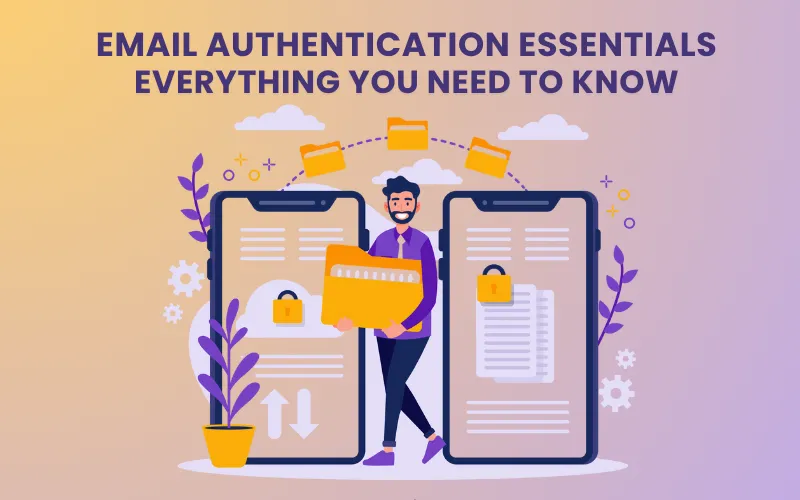
In today’s digital economy, email remains the most widely used communication channel for businesses. Whether it’s marketing campaigns, client proposals, or team updates, email is the backbone of professional interaction.
Unfortunately, it’s also a prime target for cybercriminals. Phishing attacks, spoofing attempts, and spam campaigns exploit vulnerabilities in email systems every day, putting both businesses and their customers at risk.
For digital entrepreneurs, who often operate lean and depend heavily on reputation, safeguarding email isn’t optional; it’s essential. That’s where email authentication comes into play.
Understanding the fundamentals of authentication not only protects your domain but also ensures your emails actually land where they should: in inboxes.
What Is Email Authentication?
Email authentication refers to a set of techniques that verify an email sender’s identity and ensure the message hasn’t been altered along the way.
Think of it as a digital passport system for your emails. Without authentication, anyone could send messages that appear to come from your domain, eroding trust and damaging your brand.
There are three core protocols every entrepreneur should know:
- SPF (Sender Policy Framework): Defines which servers are allowed to send emails on behalf of your domain.
- DKIM (DomainKeys Identified Mail): Uses cryptographic signatures to prove the email content hasn’t been tampered with.
- DMARC (Domain-based Message Authentication, Reporting & Conformance): Builds on SPF and DKIM to give domain owners more control, telling receiving servers what to do when an email fails checks.
Together, these systems create a layered defense against forgery and fraud.
Why It Matters for Entrepreneurs
Large corporations may survive an occasional phishing attack, but for small businesses and entrepreneurs, even one incident can be devastating. An unprotected domain could be used to send fake invoices, phishing links, or spam, resulting in:
- Loss of customer trust: Clients may avoid engaging with emails that look suspicious.
- Damage to reputation: Once your domain is flagged as unsafe, regaining credibility is an uphill battle.
- Lower deliverability rates: Major providers like Gmail and Outlook may filter or block unauthenticated emails.
- Financial consequences: Cybercriminals impersonating your business can directly scam customers or partners.
Email authentication ensures your brand’s integrity stays intact and that your communication channels remain both trusted and effective.
The Role of SPF in Authentication
Among the core protocols, SPF often serves as the starting point. By publishing an SPF record in your domain’s DNS settings, you’re essentially telling the world, “These are the servers authorized to send mail on my behalf.”
If an email claiming to be from your domain originates from an unauthorized server, it fails the SPF check and can be marked as suspicious.
For entrepreneurs who use multiple third-party services, such as email marketing platforms, CRM tools, or invoicing software, maintaining a correct SPF record is critical. Each new service you use to send email needs to be included in your SPF record.
Using an SPF record checker can help you validate that your configuration is accurate and that no unauthorized services are being overlooked. This small step can save you from big problems down the line.
DKIM: Protecting Integrity
While SPF verifies the sender, DKIM ensures the message itself hasn’t been altered. It attaches a digital signature to outgoing emails, which receiving servers can verify using your domain’s public key stored in DNS.
This is particularly important for entrepreneurs sending sensitive information, such as proposals, contracts, or payment details. With DKIM, recipients know the content they see is exactly what you sent, nothing more, nothing less.
DMARC: Closing the Loop
SPF and DKIM are powerful on their own, but DMARC ties them together. It gives domain owners visibility into who is sending mail from their domain and allows them to specify how receiving servers should handle failures.
For example, you can set a DMARC policy that tells receiving servers to reject any email that doesn’t pass both SPF and DKIM checks. Over time, this eliminates spoofing attempts and provides valuable reports that show if unauthorized parties are trying to impersonate your brand.
For entrepreneurs scaling their businesses, DMARC is especially valuable because it grows with you. Whether you’re sending a handful of client updates or thousands of marketing emails, DMARC ensures consistency and protection.
Best Practices for Entrepreneurs
Implementing email authentication may seem technical, but a few best practices can make the process manageable:
- Start with SPF: Publish an accurate SPF record and update it whenever you add new email services.
- Enable DKIM: Most major email providers support DKIM. Make sure it’s activated and functioning properly.
- Adopt DMARC gradually: Begin with a “monitor” policy to collect reports before moving to stricter enforcement.
- Regularly audit your setup: Use tools like an SPF record checker and DMARC report analyzer to ensure everything stays current.
- Educate your team: Even the best authentication won’t stop a phishing link from being clicked. Train employees and contractors to recognize red flags.
Beyond Protection: The Business Benefits
Email authentication isn’t only about defense. It also brings clear business advantages:
- Improved deliverability: Authenticated emails are more likely to reach the inbox instead of spam folders.
- Higher engagement rates: Customers trust authenticated messages, which translates to better open and click-through rates.
- Brand alignment: DMARC can be paired with BIMI (Brand Indicators for Message Identification), allowing your logo to appear in supported inboxes, reinforcing recognition and trust.
For entrepreneurs competing in crowded markets, these benefits can translate directly into revenue and growth.
Final Thoughts
Email authentication is no longer a technical luxury reserved for large corporations; it’s a business necessity. For digital entrepreneurs, it represents the difference between being trusted or ignored, secure or vulnerable.
By implementing SPF, DKIM, and DMARC, and by regularly validating your setup with tools like an SPF record checker, you can protect your brand, your customers, and your growth potential.
In a digital world where first impressions are often made in the inbox, ensuring your emails are authenticated is one of the smartest investments you can make.